
Zurilma ‘Zuri’ Anuel: Helping Entrepreneurs through Collaboration and Relationships
Reaching entrepreneurs across 22 counties is not work one organization can do alone. Zuri’s work depends on partners who bring trusted relationships, local knowledge, expertise, and resources that help entrepreneurs move forward.
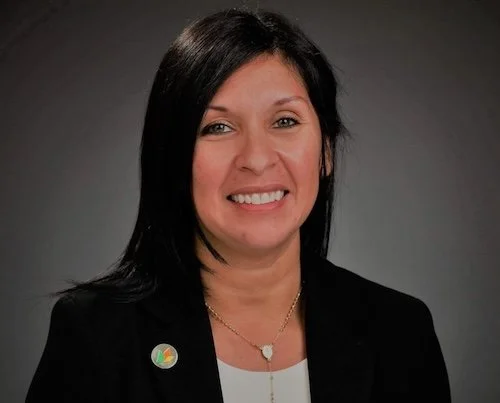
Zurilma Anuel, who goes by Zuri recounts how a concrete contractor came to her with plenty of work and long days, but the money he earned never seemed to reflect the effort he was putting in. When they sat down and worked through the numbers, they found he was making about $7 an hour because his estimates did not account for materials, travel, overhead, or time spent going back and forth between jobs.
As director of the Western Women’s Business Center, a program of Carolina Small Business Development Fund, Zuri helps entrepreneurs across Western North Carolina. The Center offers coaching, training, connections to capital, and bilingual support. Her work is rooted in the relationships surrounding an entrepreneur and the care partners take in helping someone move forward.
Entrepreneurship has always been close to home for Zuri. Her mother ran a restaurant, and other members of her family have owned small businesses in South America. She began her career in traditional banking, where she saw how easily entrepreneurs could be turned away because of credit scores, limited collateral, missing documentation, or language barriers. She could help people understand the bank’s process, but the support often ended before they had a real path forward.
In 2010, Zuri began exploring a translation and interpretation business of her own and enrolled in a bilingual business-planning class. The numbers showed her the business was not ready to grow, but the class connected her with a nonprofit that recognized what she could contribute and hired her to support Latino entrepreneurs. That relationship introduced her to Community Development Financial Institutions (CDFIs) and showed her what can happen when people share what they know, recognize one another’s strengths, and open a door. She now brings that same spirit to entrepreneurs and partners across Western North Carolina.
Partners help the work reach further
Serving 22 counties requires strong local relationships. Rural entrepreneurs may face limited internet access, long travel distances, and a shortage of bilingual services. Zuri and her team rely on partners who know their communities and can help build trust. One of those relationships began in 2017, when Zuri met José Alvarez of Prospera. Over nine years, they have developed grants and projects together while learning where each organization can lead and when the other should step forward.
Those relationships mattered deeply after Hurricane Helene, when business owners needed clear information and hands-on help. Through WNC Strong, organizations brought recovery resources together in one place. Some offered bilingual, in-person help with paper applications. Others provided loans, underwriting, or funding. Dogwood Health Trust had convened 27 organizations through an Access to Capital Cohort shortly before the hurricane. Because many of those relationships were already in place, people knew who to call and what each organization could contribute. For Zuri, the experience reinforced the value of building trust before it is urgently needed. The very idea of building strong relationships before they are urgently needed, serves as the central thread in Liminal Collaboration’s work with Dogwood Health Trust’s Collaboration & Innovation initiative, which supports organizations working together around shared community goals.
Trust requires honesty
Trust between leaders does not automatically extend to their teams. Zuri has seen frustration grow when staff from partner organizations had different expectations about what information could be shared and who was responsible for what. A facilitated retreat gave both teams space to explain how their organizations worked, clarify roles and boundaries, and name what they needed from one another. The conversation helped clear up assumptions and gave the teams a stronger foundation for working together. She also believes honesty includes being clear when her organization cannot take something on while continuing to care for the relationship.
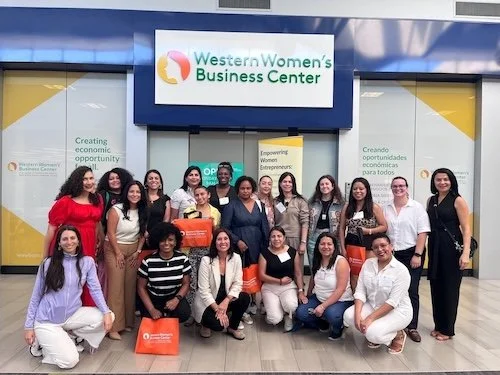
Zuri, front row, third from left
Zuri’s own path into this work began when someone recognized what she could offer and opened a door. She has carried that experience into her leadership by paying close attention to where people are getting stuck, seeing the strengths they already bring, and connecting them with others who can help. She is willing to step into a gap while making room for others to bring their knowledge and leadership.
This story shows the care strong partnerships require. People need time to understand one another’s roles, be honest about what they can offer, and recognize the knowledge already held across a community. When those relationships are built with intention, they become something people can rely on. For one entrepreneur today. For an entire region when the next challenge comes.