
Sharing the Load
Community maintenance in progress…
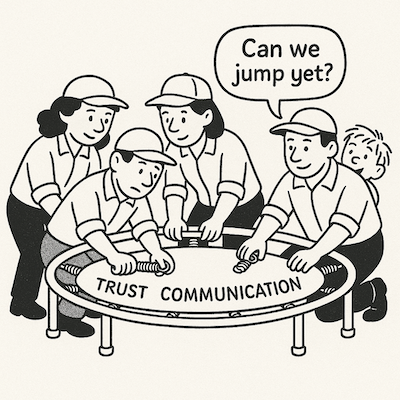
About six months ago, a friend of a friend was getting rid of an old trampoline from their backyard. It was free, so I “jumped” at it. The catch was that I had to take it apart, pack it in my car, move it, and put it back together. But after a few YouTube tutorials, a lot of grumbling choice words, and some minor scratches to my car, voila! A rusty, musty, mossy, squeaky trampoline, ready to go!
What I thought was a 90-minute job, took half a day. The things we do for kids.
While I was putting it together, I noticed that 2 of the 96 springs holding the elastic tarp in place looked like they were about to break. I intentionally placed those springs at opposite sides of each other. The thinking was that if one broke while a kid was jumping, the impact on the other weak point wouldn’t be as noticeable, as the load was distributed.
We are living in a time when many of the resources and organizations we rely on are constantly being stretched, and in some cases, dismantled. It’s an especially precarious time to be doing human services work, working for the public good, or anything that is benefiting those needing the most support. This ripple is being felt not just at the federal level, but in our hometowns, both for those receiving the services and those providing them.
A couple of weeks ago we were leading a workshop for collaboratives that are at a point of choosing community-change strategies that are best for the community, based on what they heard from residents. Many months' worth of work led to this point, and it was exciting to see the culmination of all they’d done together. Yet, there was a question that was asked that stopped me in my tracks:
“How do we know if it is a sustainable strategy?”
I’d worked with groups many times over the years to do my best to answer this question (within their context). But this time I found myself mentally scrolling through all the headlines from the past months’ news, and I was left speechless. When funding sources, agencies, organizations, and even concepts that have been steadfast for decades are all of a sudden on the chopping block, how should we think about sustainability?
The themes I am used to saying are like, “Embed the strategy within a job description.” Or “Create a policy change.” Or “Implement a funding model that is self-perpetuating.” But at this moment, all of these ideas are unstable when it comes to supporting ongoing work that helps vulnerable populations thrive.
So, what’s the answer? I believe that we just need to look to the old trampoline and the 96 springs keeping the kids bouncing.
I reflected back on the group. It was a multi-sectoral group of partners that had come together around the problem; agreed on the strategy together after working closely with residents and other organizations; and were all committed to seeing it through. Yes, we need to support the organizations that are doing good work for our residents, and the best way to do this is by distributing responsibilities among many and delegating to those committed to action and with the appropriate skills. Honestly, these attributes make the best models for a sustainable strategy right now.
Allocated funds for certain projects come and go. Jobs can be targeted and eliminated. Policies are being rewritten with flippant disregard for democratic processes. It is an anxiety-ridden time, where big decisions are being made that impact so many of our livelihoods with little regard for data or long-term consequences.
Yet, through all of that, there are still people, organizations and most of all, a firm commitment to wanting neighbors not just to survive but thrive. Liminal Collaboration has too many examples to share here of individuals and organizations that are meeting the needs for their community and seeing the positive impacts of coordination and collaboration, in spite of whatever is happening in our news cycle (most of which is out of our control). But sustainability doesn’t always come from rigid structures or guaranteed funding. Sustainability, particularly in times like these, comes from people who choose to show up, tear down and rebuild when necessary, and share the load.