

Shannon Moretz: Returning to Her Roots
This piece is part of a new Liminal Collaboration spotlight series, sharing stories and insights from leaders working at the community level.
“Coming back to where you started is not the same as never leaving.” Terry Prachett
Shannon does not describe herself as a leader. She calls herself curious. Reluctant, even. Someone trying to make things a little better where she lives, without a specific career plan guiding the way. That humble, observant, and deeply rooted approach has shaped every chapter of her work in Caswell County, North Carolina, from journalism to community health to collaborative and civic leadership, and now back to journalism.
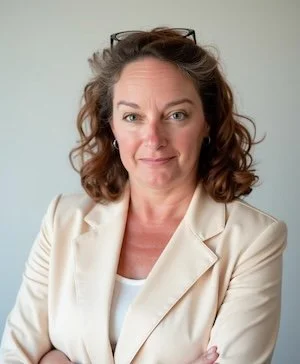
Caswell County is a rural county on the northern border of North Carolina with just under 23,000 residents. Growing up in Caswell County, Shannon learned early how much place matters. She spent long stretches of time with her great grandparents, listening more than she spoke and paying attention to how the world around her actually worked. “Knowing what was going on in the world felt like a spectator sport,” she recalls. When she was a little girl, she imagined being a police officer or journalist, both roles embedded in local communities and shaped by proximity to people’s lives.
That instinct followed her into adulthood. After marrying young, starting a family, and a deep personal loss, Shannon returned home and began working in health administration before writing for the Caswell Messenger. The community trusted her. She was steady, fair, objective, and careful not to make people feel ignorant or exposed. Reporting taught her how power actually moves in small rural counties, and how unevenly it is held.
What unsettled her was how familiar it all felt. National political battles were playing out locally in the county seat, often among people she had grown up with. Caswell County had become a bedroom community, with most residents working elsewhere. Neighbors no longer felt like they knew each other or understood one another’s point of view. And funding that was intended to “help” was often from elsewhere, places that didn’t understand Caswell’s context or needs. As a rural reporter, Shannon could describe what she saw but could not intervene. Ethical lines mattered to her. She would not sensationalize tragedy or publish stories that stripped people of their dignity. Still, writing and not participating began to feel like its own kind of failure. That was when she stepped into the work.
While still reporting, Shannon earned her EMT certification and began working in emergency services, an industry marked by high turnover and constant pressure. She also worked at the senior center and joined The Building Economic Success Together (BEST) Coalition, helping with tax preparation, financial literacy, and outreach. This time, she was not telling stories about people. She was working alongside them.
One project made the shift especially clear. A foundation had invested heavily in a marketing campaign to increase tax return filings, but it was reaching only about a third of the people it needed to. Shannon pushed back and proposed something simpler. With a single postcard mailer that cost $3,700 and a deep understanding of how people in Caswell County actually received information, tax filings increased by 140 percent. The solution was not innovative. It was familiar.
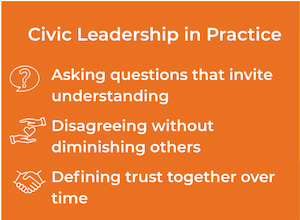
Working this close to people reshaped how Shannon thought about civic leadership. Asking the right questions mattered more than having the right answers. Disagreeing without humiliating people mattered more than winning an argument. Trust was not something you assumed. It was something you defined together.
As she became more involved in collaborative work across the county, patterns emerged. Collaboration could unlock real progress, but it could also stall completely. When responsibility was shared without clarity around authority, nothing moved. When fear went unspoken, it still shaped decisions. When power dynamics were ignored, they hardened.
Eventually, Shannon agreed to help launch The Health Collaborative chapter in Caswell County, funded by the Danville Regional Foundation and then sustained by the BlueCross BlueShield of North Carolina Foundation. The work mattered, but it clarified something she had been circling for years. Collaboration only works when people are honest about who decides, who holds power, and how conflict is handled. Without that clarity, good intentions lead to paralysis.
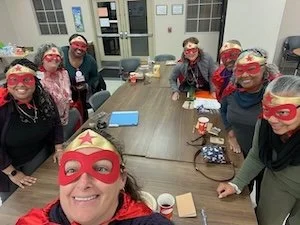
So, when Shannon stepped away from a regional leadership role and returned to journalism, it was not because she was done with collaboration. It was because she had found another way to support it. This time, journalism felt different. She began to see it as infrastructure, something that gives rural communities shared language, context, and a place to think together. Local journalism is community work and requires sitting with discomfort, holding tension without manipulation, and being honest about intent versus impact.
What surprises her most, and what gives her hope, is the response. People from across the political spectrum reach out in support. Neighbors she assumes had written her off show up anyway. Again and again, she has seen the same thing. People want good information. They want to understand what is happening where they live. They want to feel connected to their community.
Shannon’s story is not about leaving collaborative work behind. It is about choosing the right role at the right moment. Leadership, she has learned, does not always look like standing at the front of the room. But it always means paying close attention, asking better questions, and caring enough to keep asking them.
Today, Shannon is the founder and publisher of Caswell News & Notes, an independent community news outlet covering local issues, culture, and civic life in Caswell County. Follow her work at Caswell News & Notes to read her reporting and stay connected to how rural communities are shaping their own stories.